A discussion on CNN following Monday’s attempted attack on a federal building in New York City has generated its own controversy after a question from the network’s host was criticized as shifting attention away from the alleged attacker and toward Immigration and Customs Enforcement.
Authorities arrested 43-year-old Andrew Arrabaca of Poughkeepsie, New York, in connection with a fire at the entrance of a federal building that houses offices for ICE, the FBI, and U.S. Citizenship and Immigration Services.
According to The Center Square, investigators allege Arrabaca intentionally started the fire and told police he was willing to injure or kill if necessary. He was described by authorities as an “anti-government extremist.”
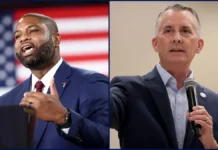
The incident became a topic on CNN’s News Night later that evening during a panel discussion with conservative commentator Scott Jennings.
Host Sarah Sidner asked Jennings whether public reaction to ICE’s activities could be contributing to incidents like the one in New York.
When CNN’s Sara Sidner suggested the anti-ICE attack in New York City may have been a reaction to ICE’s actions, Scott Jennings ended the debate on the spot.
In less than 30 seconds, he exposed exactly how utterly absurd that entire premise is.
SIDNER: “Is it possible that it… pic.twitter.com/n6i6Ke5AqI
— Overton (@overton_news) July 21, 2026
“Is it possible that it’s the actions of ICE that has people talking like this, not just getting messaging from the Democrats, but seeing what’s happening in their communities?” Sidner asked.
The question immediately drew pushback from Jennings, who argued that political disagreements can never justify violence against government employees or federal property.
“So, if you believe that a government agency is doing something that you don’t like, and your choices are A, cast a vote, B, use your words, or, C, go set off an incendiary device at the federal building in New York City, and you pick C, there’s no justification for this,” Jennings responded.
“There’s no rationalization of it, and that’s patently ridiculous if that’s what anybody’s going to argue tonight.”
The exchange quickly spread online, with critics accusing Sidner of framing the attack in a way that appeared to place partial responsibility on ICE rather than solely on the individual accused of carrying it out.
Some commentators argued that the same reasoning would likely be rejected if applied to acts of political violence committed by individuals on the political right. They questioned whether similar questions would be asked following other high-profile incidents, such as the Jan. 6, 2021, attack on the U.S. Capitol.
Supporters of Sidner’s question, however, could argue that examining possible motivations behind an attack is not the same as excusing or justifying it. Journalists and investigators frequently explore whether political rhetoric, public policy, or other factors influenced a suspect’s actions without diminishing the suspect’s legal responsibility.
That distinction became the central point of disagreement. Jennings focused on individual accountability, arguing that policy disagreements should be addressed through elections, public debate, or lawful protest rather than violence.