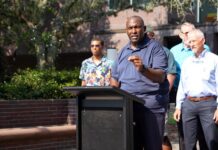
Michigan’s Democratic Senate primary took a sharper turn this week after newly disclosed financial records and campaign financing became central topics during the race’s final debate.
The contest, which will determine the Democratic nominee to replace retiring Sen. Gary Peters, has increasingly focused on former Wayne County health official Abdul El-Sayed and Rep. Haley Stevens, the two remaining major contenders.
The latest dispute began after El-Sayed released updated financial disclosure forms ahead of Tuesday’s debate. According to CBS News, the filings showed that he and his wife own rental properties in India and the United Arab Emirates. Both properties are listed in his wife’s name and could each be worth as much as $250,000.
.@AbdulElSayed filed his long-awaited 2026 financial disclosure this afternoon.
The most interesting difference between this year’s and last year’s: a rental property in Dubai owned by his wife, worth between $100,000 and $250,000. pic.twitter.com/L8yA87qmOs
— bryan metzger (@metzgov) July 27, 2026
The disclosures attracted additional attention because El-Sayed has spent much of his campaign criticizing outside political spending, particularly money connected to the American Israel Public Affairs Committee (AIPAC), arguing that large outside donations have an outsized influence on elections.
During the debate, Stevens argued that the same level of scrutiny should apply to El-Sayed’s own finances.
“It also is about transparency, and you have not released your full tax returns,” Stevens said. “Three-hundred thousand dollars in other income while you sat in a podcast chair.”
She continued by questioning the sources of financial support connected to his campaign.
“You talk about getting money out of politics and putting money in people’s pockets, but still, nobody knows who’s putting the money in your pockets.”
Abdul El-Sayed smiles as Haley Stevens calls him out for not releasing his tax returns:
“It also is about transparency, and you have not released your full tax returns…you sat in the podcast chair and you hawked junk healthcare cures.” pic.twitter.com/wbOiXXdZmt
— RNC Research (@RNCResearch) July 28, 2026
Stevens also referenced a political action committee supporting El-Sayed that has reportedly received significant funding from his father-in-law. According to campaign finance records cited during the debate, El-Sayed’s father-in-law contributed approximately $300,000 to the Fighting for Michigan PAC, which has spent about $2.3 million backing his campaign.
Following the debate, El-Sayed suggested the attention surrounding his overseas property holdings was influenced by his background.
“I wonder why they’re so focused on ‘foreign properties’ with somebody with a name like mine,” he told a reporter.
The exchange added another chapter to an increasingly contentious primary campaign.
Abdul El-Sayed insinuates that it’s racist to call him out for owning foreign propertie(s) https://t.co/y6NCyuLcOt pic.twitter.com/jKMwp89N0D
— DSA Watch (@DSA_Watch) July 28, 2026
El-Sayed has emerged as one of the progressive wing’s strongest candidates after other left-leaning contenders exited the race. His campaign has emphasized Medicare for All, economic reform, and criticism of U.S. policy toward Israel.
At the same time, his candidacy has generated controversy over several issues. Critics have questioned appearances with political commentator Hasan Piker, challenged statements made on the campaign trail regarding his professional credentials, and scrutinized positions he has taken on healthcare while noting that his wife’s psychiatry practice reportedly does not accept Medicare patients.
Supporters have argued that El-Sayed represents a more progressive direction for the Democratic Party, while opponents contend that aspects of his record deserve closer examination before voters cast their ballots.