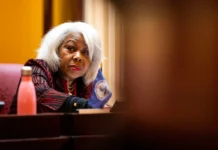
U.S. District Judge James Boasberg has issued a sweeping follow-up order in a closely watched case involving Venezuelan nationals deported earlier this year, directing the Trump administration to facilitate their return from El Salvador so they can challenge their removal in U.S. court.
The ruling stems from Boasberg’s December 22, 2025 decision in J.G.G. v. Trump, in which he concluded that the administration denied due process to a class of Venezuelans deported in March under a presidential proclamation invoking the Alien Enemies Act. The plaintiffs had been designated as members of Tren de Aragua (TdA), a Venezuelan criminal organization, and removed to El Salvador.
In that earlier opinion, Boasberg held that the deportees were entitled to a “meaningful opportunity” to contest both their alleged TdA affiliation and the validity of the president’s proclamation. He ordered the government to propose steps to facilitate such hearings—either by returning the individuals to the United States or by arranging some alternative process from abroad.
JUST IN: Judge BOASBERG has ordered the Trump administration to facilitate the return of Venezuelan men illegally deported under the Alien Enemies Act and who are currently in countries other than Venezuela. https://t.co/mpLgN8Wi2W pic.twitter.com/aj88O6ijCh
— Kyle Cheney (@kyledcheney) February 12, 2026
According to the judge’s latest order, the administration’s response was inadequate. Boasberg characterized the government’s filings as effectively refusing to engage with the remedial process. Citing the Supreme Court’s 2025 decision in Noem v. Abrego Garcia, he concluded that the judiciary must ensure a workable remedy when due process violations are found.
The new directive requires the government to facilitate the return of plaintiffs who wish to come back to the United States. It also allows others to supplement their habeas corpus petitions from abroad. Boasberg emphasized that he was acting with awareness of the executive branch’s primacy in foreign affairs, stating that the court would “tread lightly” in that domain.
The administration is expected to appeal. At issue is not only whether due process was violated, but also the scope of judicial power to remedy such violations when individuals have already been removed to foreign soil. Critics of the ruling argue that compelling the executive branch to arrange and potentially fund the international return of foreign nationals intrudes into immigration enforcement and foreign policy—areas traditionally afforded significant executive discretion.
Supporters of the court’s decision counter that habeas corpus protections and constitutional due process do not evaporate once a removal has occurred, particularly if that removal was conducted in violation of a court order. They argue that without meaningful remedies, constitutional safeguards would be hollow.
The case now presents a fundamental constitutional question: when a federal court finds a due process violation in immigration enforcement, how far can it go in crafting a remedy—especially when that remedy intersects with international arrangements and executive authority?
Given the stakes, the dispute appears likely to reach the Supreme Court. The justices may soon be asked to clarify the boundary between judicial authority to enforce constitutional rights and presidential control over immigration and foreign affairs—an issue that sits at the heart of America’s separation-of-powers framework.