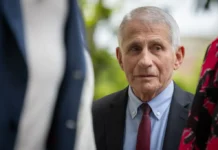
Xavier Becerra’s tenure as Secretary of Health and Human Services is re-emerging as a political liability as he seeks traction in California’s gubernatorial primary, with renewed attention on the handling of unaccompanied migrant children during a surge at the southern border.
The issue traces back to a period when federal shelters were overwhelmed by the number of minors entering the system without guardians. As facilities reached capacity, children were held in temporary sites, including large-scale tent facilities and overflow centers run by federal authorities. The situation drew national attention, fueled in part by images from inside those facilities.
Under pressure to reduce overcrowding, HHS accelerated the process of releasing children to sponsors — typically relatives or vetted adults in the United States. According to a 2023 New York Times investigation, that push for speed came with internal concerns. Staff within the agency warned that safeguards were being weakened, and that the system was prioritizing quick placements over thorough vetting.
Becerra was quoted in that report emphasizing efficiency, comparing the process to an assembly line — a remark that became a focal point for critics. Around the same time, internal warnings highlighted a potential rise in labor exploitation risks, with officials arguing that existing incentives did not sufficiently prioritize safety.
Data cited in the investigation showed that over a two-year period, more than 85,000 children could not be reached during follow-up calls.
Becerra disputed the characterization that those children were “lost,” maintaining they had been placed with approved sponsors and that HHS authority largely ends after placement. Supporters also pointed to structural limits in the agency’s role and described the situation as part of a broader, strained immigration system.
Subsequent oversight reports added detail to the concerns. The HHS Office of Inspector General found gaps in documentation and follow-up procedures, including missing records for certain safety checks and inconsistencies in post-release contact. Earlier findings had also noted that policy changes aimed at speeding up placements may have reduced some protective measures.
Congressional Republicans pursued the issue through subpoenas and hearings, seeking more detailed records on sponsor vetting and monitoring. That effort led to document production and testimony, but lawmakers said key questions remained unresolved, with oversight findings ultimately providing the clearest picture of system shortcomings.
Now, as Becerra campaigns in California, those events are being revisited by critics who argue they reflect management failures. His allies counter that the challenges were rooted in a surge-driven system under strain, and that responsibility extends beyond any single official.