Every time it seems the Democratic Party’s energy agenda has reached its outer limits, another proposal emerges that pushes even further.
That was the reaction many conservatives had after Politico’s E&E News published a report Friday titled, “Progressives look to recharge the Green New Deal for the AI era.”
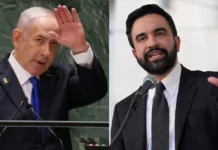
Among those featured was Melat Kiros, the self-described socialist who recently defeated 15-term Rep. Diana DeGette in Colorado’s Democratic primary. Kiros argued that the Green New Deal should now be viewed as merely a starting point.
“The Green New Deal, frankly, is a floor now, not a ceiling, for what we need to actually be looking at doing,” Kiros said.
That statement immediately caught attention because the original Green New Deal, introduced in 2019 by Rep. Alexandria Ocasio-Cortez and Sen. Ed Markey, was already one of the most ambitious climate proposals ever put forward in Congress.
Supporters viewed it as a blueprint for transforming the nation’s energy and transportation systems. Critics saw it as an enormously expensive expansion of federal power that would fundamentally reshape the American economy.
Kiros’ suggestion that the original proposal no longer goes far enough has only intensified that debate.
For critics, the concern is not simply the size of the proposal but the governing philosophy behind it. They argue the Green New Deal relies heavily on centralized government planning, expansive federal regulation, and mandates that would allow Washington to play a much larger role in directing economic activity.
Those concerns become even more pronounced when applied to artificial intelligence.
The United States is currently engaged in fierce competition with countries such as China to develop advanced AI technologies. That race depends on enormous computing capacity, vast amounts of reliable electricity, and rapid private-sector investment. Opponents of the Green New Deal argue that policies restricting fossil fuel production while increasing regulatory burdens would make it significantly more difficult to build the energy infrastructure AI requires.
The Politico report also noted that several progressive candidates promoting these ideas have received support from the Sunrise Movement, a climate advocacy organization that has long championed the Green New Deal. The organization has received financial backing from foundations including the Rockefeller Foundation, the Tides Foundation, and the Open Society Policy Center.
The original Green New Deal generated controversy from the moment it was introduced. Critics pointed to proposals that they argued would dramatically reduce fossil fuel use, accelerate the transition to renewable energy, and reshape transportation and infrastructure on a massive scale. Supporters countered that the proposal was intended as a broad framework rather than detailed legislation and argued that significant action was necessary to address climate change.
Now, some progressives argue those earlier goals should be viewed as only the beginning.
That has alarmed Republican leaders.
Following a series of Democratic primary victories by progressive candidates, House Speaker Mike Johnson warned that the party’s left wing is becoming increasingly influential.
“The Democrat Party—the socialists, the Marxists—have nominated some of the most radical candidates to ever run for office, and they’re running for Congress. The insurgent left is on the rise,” Johnson concluded.